

0 грн.
CheckoutTop 5 most common fish diseases in Ukraine: prevention and control
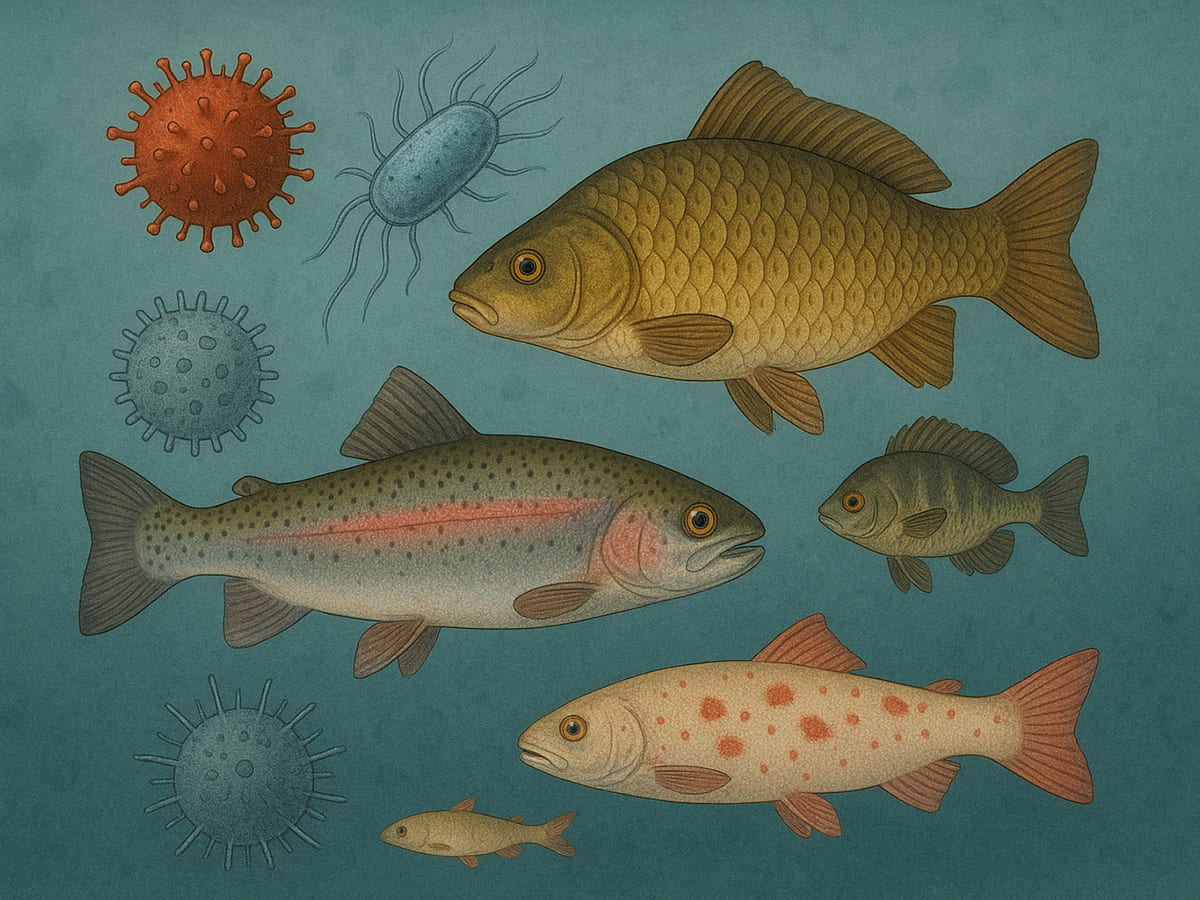
Successful fish farming is impossible without understanding the main diseases that can affect fish in Ukrainian conditions. Timely diagnosis, proper prevention and effective fish treatment are key factors for maintaining herd health and economic efficiency of the enterprise.
1. Spring Viremia of Carp (SVC)
Disease Description
Spring viremia of carp is one of the most dangerous viral fish diseases, widely distributed in Ukraine. The disease is caused by rhabdovirus and primarily affects cyprinid fish.
Symptoms
- Lethargic fish behavior, loss of appetite
- Darkening of skin coloration
- Petechial hemorrhages on gills, fins and skin
- Exophthalmia (bulging eyes)
- Abdominal dropsy
- Hemorrhages in internal organs
Causes
- Sharp temperature fluctuations (especially in spring)
- Stress factors (transportation, high stocking density)
- Decreased fish immunity
- Virus introduction with new fish or equipment
Carp Disease Prevention
- Compliance with quarantine measures when importing new fish
- Maintaining optimal water parameters
- Stocking density control
- Immunity strengthening through quality feeding
- Regular disinfection of equipment and inventory
2. Carp Erythrodermatitis (Aeromonosis)
Disease Description
Bacterial disease caused by bacteria of the genus Aeromonas. One of the most frequent causes of mass fish mortality in pond farms of Ukraine.
Symptoms
- Ulcers and erosions on fish body
- Red spots and hemorrhages on skin
- Scale protrusion
- Abdominal enlargement (dropsy)
- Eye cloudiness
- Fin destruction
Causes
- Unfavorable keeping conditions
- High content of organic matter in water
- Mechanical injuries to fish
- Stress and weakened immunity
- Unbalanced feeding
Prevention
- Maintaining good water quality
- Regular cleaning of ponds from organic residues
- Balanced feeding with quality feeds
- Avoiding fish trauma during maintenance
- Oxygen regime control
3. Ichthyophthiriosis (White Spot Disease)
Disease Description
Parasitic disease caused by the ciliate Ichthyophthirius multifiliis. Particularly dangerous for juvenile fish and at high water temperatures.
Symptoms
- White spots the size of semolina grains on body and fins
- Intensive rubbing of fish against objects
- Accelerated breathing
- Loss of appetite
- Fin sticking
Causes
- Parasite introduction with new fish or live feeds
- Stressful keeping conditions
- Sharp water temperature changes
- Weakened fish immunity
Prevention
- Quarantining new fish for at least 14 days
- Disinfection of live feeds
- Maintaining stable water temperature
- Regular disinfection of ponds and equipment
4. Gill Rot
Disease Description
Bacterial disease of gills, often developing as a secondary infection in other fish diseases or unfavorable keeping conditions.
Symptoms
- Darkening and destruction of gill filaments
- Mucus formation on gills
- Labored breathing
- Fish gathering at water surface
- Loss of appetite and lethargy
Causes
- Poor water quality (high ammonia, nitrite content)
- Oxygen deficiency
- High fish stocking density
- Mechanical gill damage
Prevention
- Water quality and gas regime control
- Regular pond aeration
- Maintaining optimal stocking density
- Timely cleaning of ponds from organic residues
5. Dactylogyrosis
Disease Description
Parasitic disease caused by monogenetic flukes of the genus Dactylogyrus, affecting fish gills.
Symptoms
- Accelerated gill cover movements
- Mucus accumulation on gills
- Darkening of gill filaments
- Restless fish behavior
- Decreased appetite
Causes
- Parasite introduction with infected fish
- Unfavorable keeping conditions
- High stocking density
- Weakened immunity
Prevention
- Preventive baths for fish
- Quarantining new fish batches
- Maintaining optimal keeping conditions
- Regular parasitological examinations
General Principles of Fish Disease Prevention
Farm Biosecurity
Creating an effective biosecurity system includes controlling entry of unauthorized persons to the territory, disinfection of transport and equipment, proper waste disposal.
Water Quality
Regular monitoring of physico-chemical water parameters is the basis for preventing most diseases. Critically important are oxygen levels, pH, ammonia and nitrite content.
Feeding
Using quality feeds according to the needs of fish of different age groups. Avoiding overfeeding, which leads to water quality deterioration.
Stocking Density
Compliance with recommended fish stocking density norms prevents stress, competition for feed and rapid spread of infections.
Prevention of carp diseases and other fish species requires a comprehensive approach, including control of keeping conditions, quality feeding, biosecurity compliance and regular veterinary control. Timely symptom detection and proper diagnosis allow preventing massive fish losses and ensuring profitability of the fish farming enterprise.
For effective fish treatment, it is necessary to consult qualified veterinary specialists who will conduct accurate diagnosis and prescribe appropriate therapy taking into account the specifics of the particular farm and current legislation.
12/06/2025 20:08:56
Comments:0
Views:573
Comments